
In the ever-evolving landscape of sustainability, a term used and often abused by so many, one concept has taken the focal point – renewable energy. As we look into minimising our environmental impact across all areas of our lives, the shift towards renewable sources of energy in both private and corporate settings has emerged as a promising trend giving us an alternative source to fossil fuels.
As good as it sounds, there are limitations to how much renewable energy can help us minimise the impact. In order to truly create a sustainable future, we must delve deeper into the dynamics of supply and demand.
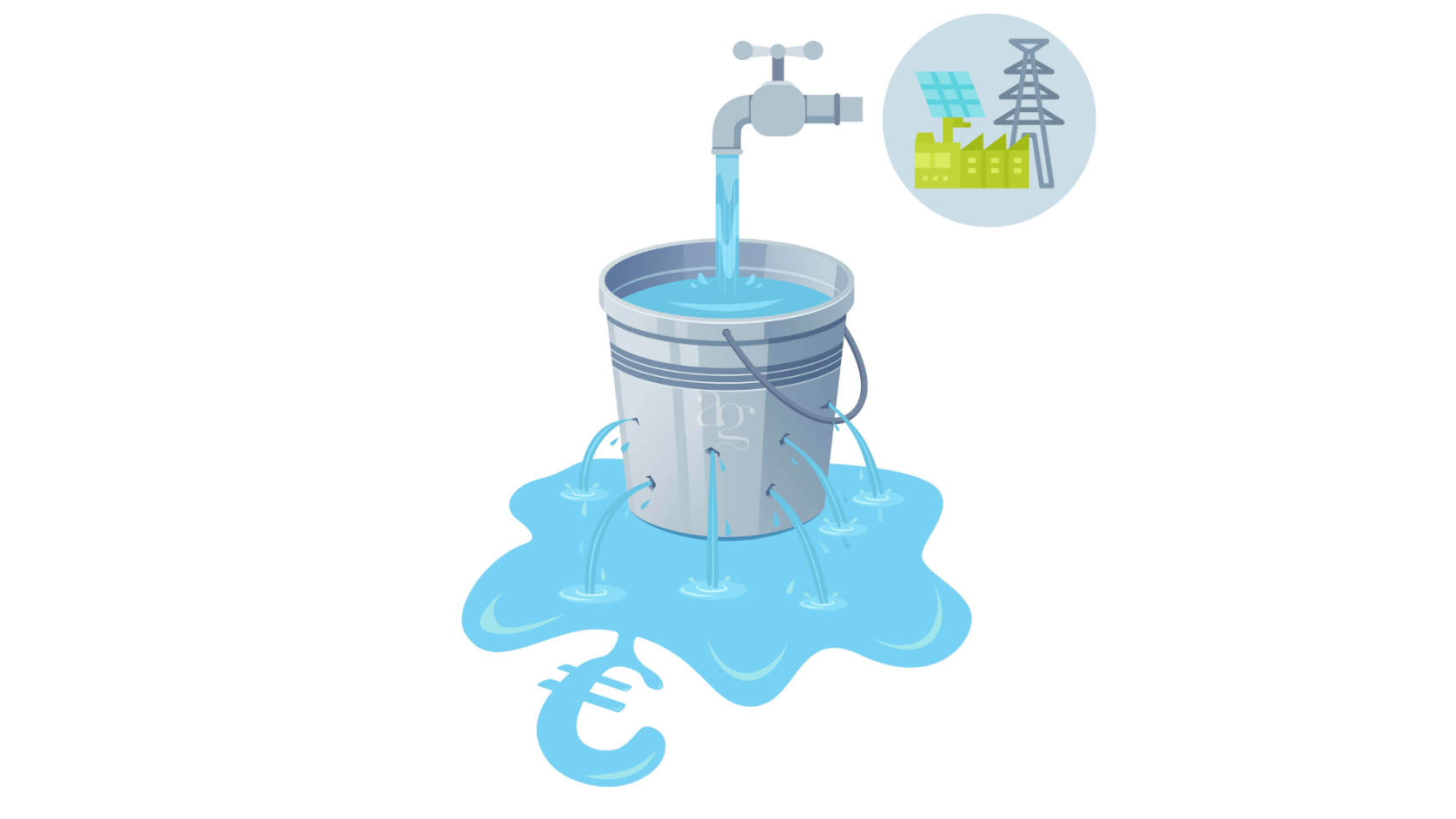
Picture this: a facility, whether it’s a home, a business, or the entire city, can be likened to a bucket filled with holes, with a constant stream of water flowing in from a tap. In this analogy, the tap symbolises the diverse sources of energy available to us, be it the traditional utility grid, as well as, the burgeoning realm of renewable energy sources like photovoltaic solar panels, wind turbines, and hydroelectric power.
On the other side of the equation, the bucket represents the various demands for energy within the facility. This encompasses everything from the flickering lights above to the hum of air conditioning units, industrial processes, and beyond. Now, the holes in the bucket—these represent energy leaks, inefficiencies, and wastage that occur within the demand side of the equation.
The crucial point to understand is that while renewable energy addresses the supply side of the equation, it does not automatically fix the demand side challenges. It’s akin to continuously filling a bucket while ignoring the holes that cause precious water, or in this case – energy to seep out.
No matter how much renewable energy we generate, if our energy demands are riddled with inefficiencies and waste, we will never achieve true sustainability.
- Are there outdated appliances guzzling unnecessary electricity?
- Are there areas where lighting can be optimised without sacrificing functionality?
- Are there opportunities to optimize the operation of industrial processes?
- Are there human errors and habits that contribute to the energy waste?
Education and awareness play a pivotal role here, as individuals and businesses alike need to understand the impact of their energy consumption patterns.